

A panic attack can make an ordinary situation feel frightening. Your heart may pound, your hands may tingle, and you may feel that something terrible is happening. Understanding the experience can help you ask for support, but it cannot establish that a new physical symptom is caused by panic.

What a panic attack can feel like
A panic attack is a sudden episode of intense fear or discomfort. Symptoms can include a racing heart, sweating, trembling, breathlessness, dizziness, nausea, chest discomfort, tingling, or a feeling of losing control. Not everyone experiences the same combination.
The National Institute of Mental Health’s panic disorder guide explains symptoms, assessment and treatment. A clinician can consider other explanations, including physical conditions and medication or substance effects.
Panic attacks and panic disorder are different
Having a panic attack does not automatically mean you have panic disorder. Panic disorder involves recurrent, unexpected attacks and continuing worry or changes in behavior related to them. Diagnosis requires an appropriate assessment.
For example, a person might begin avoiding buses after a frightening episode on a journey. The useful question is how the fear is affecting daily life and what support could help. Counting symptoms on a website cannot answer that question by itself.
When symptoms need urgent help
Do not assume new or unexplained chest pain is panic. Sudden persistent chest discomfort, pain spreading to the arm, back, neck or jaw, or chest pain with breathlessness, sweating or faintness can signal an emergency. Call your local emergency number; in the US or Canada call 911. Do not drive yourself.
A previous panic diagnosis, a young age or a stressful day does not rule out a physical emergency. Other new, unexplained or recurring symptoms also deserve medical advice. Our chest-pain guide below explains the distinction in more detail.
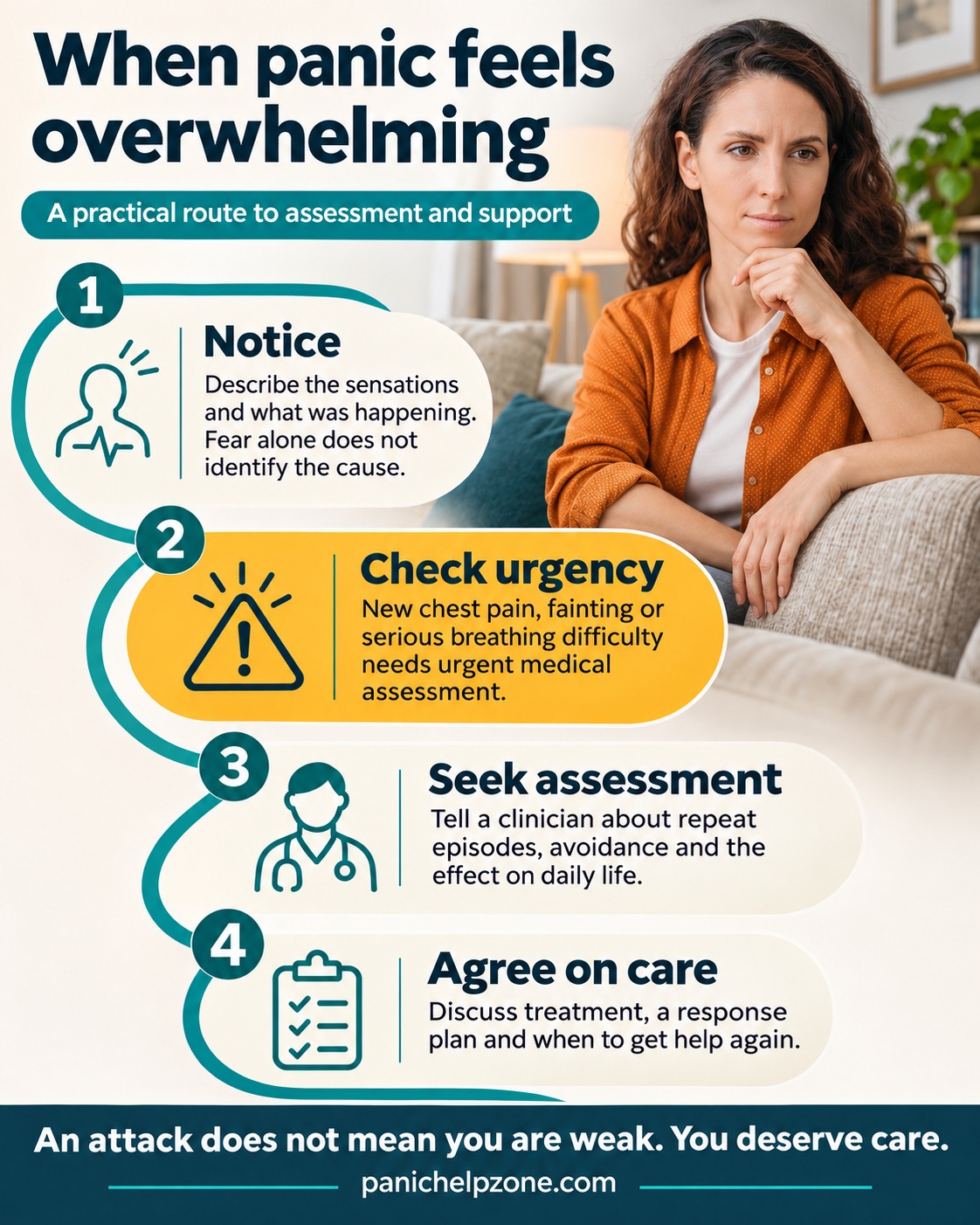
Read the visual guide as text
- Notice. Describe the sensations and what was happening. Fear alone does not identify the cause.
- Check urgency. New chest pain, fainting or serious breathing difficulty needs urgent medical assessment.
- Seek assessment. Tell a clinician about repeat episodes, avoidance and the effect on daily life.
- Agree on care. Discuss treatment, a response plan and when to get help again.
An attack does not mean you are weak. You deserve care.
Make the moment easier to manage
If you have been medically assessed and have a plan for familiar panic symptoms, follow that plan. Where it is safe, reduce immediate demands: sit somewhere suitable, let a trusted person know what is happening, and postpone a nonessential task.
- Use a short request: “I’m having a difficult moment. Please stay nearby and speak slowly.”
- Choose a comfortable point of attention, such as your feet on the floor or an object in the room.
- If a breathing exercise is part of your agreed plan, keep it gentle. Stop an exercise that makes you feel worse.
- Seek help if symptoms are new, different, worsening or outside the plan you were given.
You do not have to perform calmness to deserve support. A grounding exercise is a comfort strategy, not a test that can prove symptoms are harmless.
Three common myths to leave behind
- “Panic means I am weak.” An intense fear response is not a character judgment. Shame can make it harder to describe what is happening and seek care.
- “One relaxation technique should fix it forever.” A technique may help in one moment and be less useful in another. Persistent difficulties need a broader assessment and plan.
- “Avoiding everything that feels frightening is the only option.” Avoidance can narrow daily life. A qualified clinician can help you consider gradual, appropriate treatment without pushing you into an unsafe situation.
Ask for a plan you can refer to later
If a clinician has assessed you for panic symptoms, ask, “Which symptoms are we treating as part of my known pattern, and which changes mean I should get urgent medical help?” Ask whom to contact if episodes start affecting travel, sleep or work. Write down the answers so you can refer back to them.
Discuss treatment and a follow-up plan
Treatment may include psychotherapy, medication or both. Cognitive behavioral therapy is one established approach used for panic disorder. The right option depends on assessment, preferences, other health needs and access to care. Do not start, stop or change prescribed medication based on this article.
Before an appointment, you could note when episodes occur, what feels new or different, how they affect sleep or everyday tasks, and any medication or substance changes. Brief notes are enough; repeated pulse checks and constant symptom searches may increase worry for some people.
Ask: “What should I do during a familiar episode? Which changes need urgent care? When should I return if things are not improving?” A reassuring test result should come with an explanation and a next step.
Prayer, spiritual reflection or another personal source of comfort can remain part of your life alongside appropriate care. They do not need to establish a cause or replace treatment. Start with one clear request for help and a plan you understand.