

A panic attack describes an episode. Panic disorder is a diagnosis that involves a pattern of unexpected attacks and ongoing worry or changes to daily behaviour. You can ask for care whenever symptoms concern you.
What an episode can feel like
A panic attack is a sudden surge of intense fear or discomfort. It can include a pounding heart, shaking, sweating, trouble breathing, dizziness, nausea, tingling or chest discomfort. The experience can be frightening even if people around you don’t notice anything.
An attack may happen in a situation you can identify, or it may feel out of the blue. These details are useful for a clinician. They do not tell you on their own whether a physical symptom is due to panic.
What clinicians assess for panic disorder
The National Institute of Mental Health’s guide to panic disorder describes a pattern of recurrent unexpected panic attacks, followed by at least a month of worry about additional attacks or changes in behaviour related to them. Clinicians also consider other explanations, including health conditions, medication and substances.
You can seek help after one episode or anytime symptoms concern you. The month criterion is part of diagnosis. When you speak with a clinician, tell them what happens between episodes as well as what an episode feels like.
Three situations worth describing at an appointment
- A first episode. A person suddenly feels dizzy and intensely frightened while shopping. They describe when it began, what they were doing and what they felt. A healthcare professional can assess possible causes.
- Repeat episodes and changes to daily life. Someone has several unexpected attacks and starts avoiding the bus because they worry about another one. The avoidance gives their clinician information about what happens between episodes.
- A clear situation. A person experiences fear and physical symptoms primarily when speaking to a group. They can explain where it happens, what else they’ve noticed and how it affects school or work.
All three can be reasons to ask for help. The NHS overview of panic disorder explains how other causes can be considered during assessment.
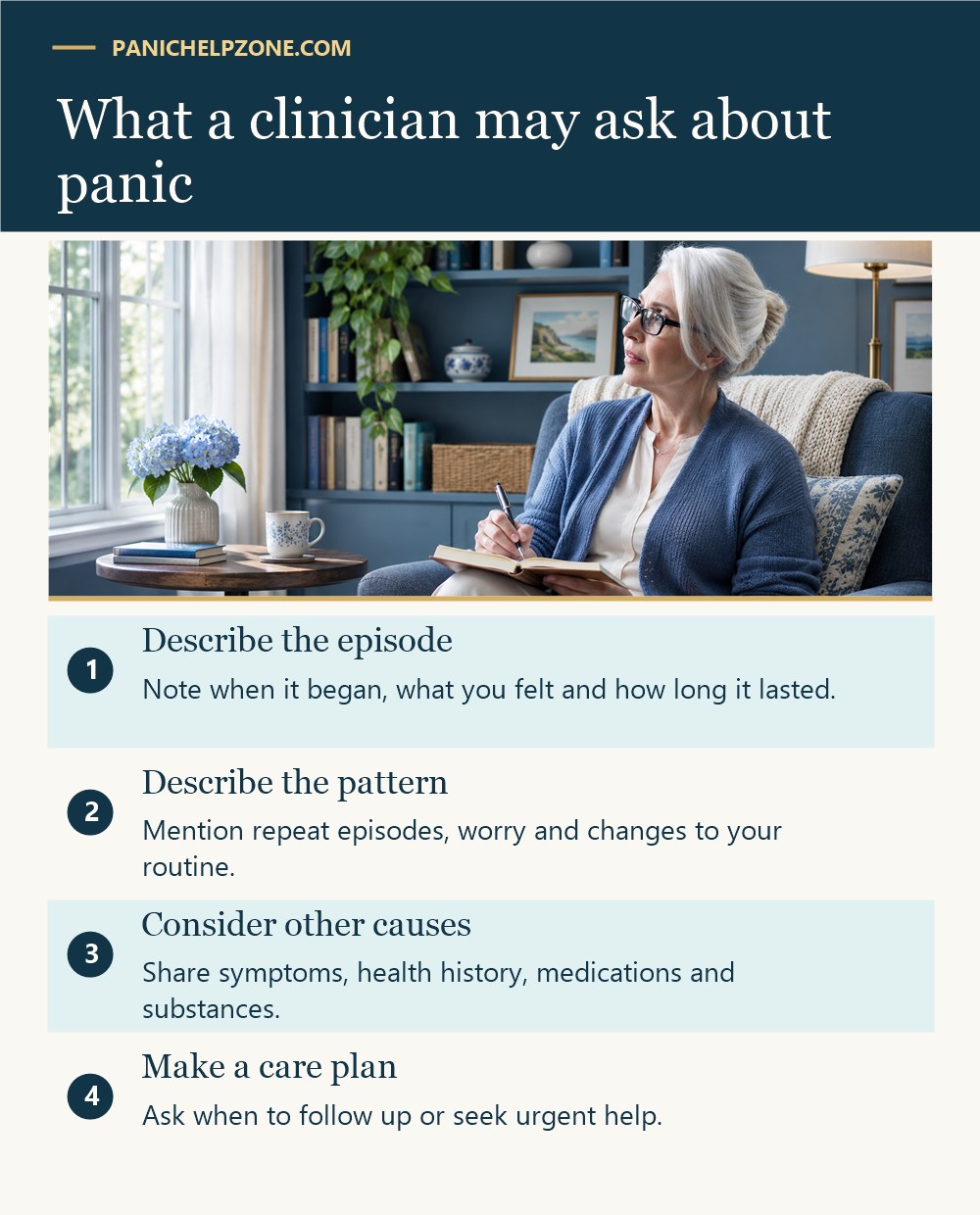
Read the visual guide as text
- Describe the episode. Note when it began, what you felt and how long it lasted.
- Describe the pattern. Mention repeat episodes, worry and changes to your routine.
- Consider other causes. Share symptoms, health history, medications and substances.
- Make a care plan. Ask when to follow up or seek urgent help.
When to seek urgent medical help
Symptoms that feel like panic can occur with other medical conditions. Seek emergency help for possible emergency symptoms such as severe chest pain, severe difficulty breathing or loss of consciousness. The NHS guide to chest pain describes additional signs that call for emergency assessment. Use your local emergency number.
If an episode is new, different from familiar symptoms, or otherwise concerning, seek medical advice. How quickly symptoms pass or whether they improve when you rest does not establish the cause.
Bring a short record to a clinician
Write down approximate dates, duration, symptoms and anything that was happening beforehand. Include changes you’ve made because you’re worried about another episode. Mention relevant health conditions, medicines, supplements, caffeine, alcohol and other substances when asked.
A useful opening could be “I had three sudden episodes this month. One woke me up, and I’ve stopped travelling alone because I worry it’ll happen again. What should we check?” You can ask how to respond if familiar symptoms return and what changes would need another assessment.
Agree on a care and follow-up plan
A clinician can discuss treatment options if they diagnose panic disorder. Options may include psychotherapy, such as cognitive behavioural therapy, medication or both. Ask what fits your circumstances, how to review progress and what to do if the plan is hard to access.
If you are helping someone else during an episode, ask whether they have a care plan they want help following. Stay with them if they want company and it is safe to do so. Seek emergency help if you see warning signs, even if they have had a panic attack before.
Related reading. Panic Attacks Explained: Symptoms, Care, and Common Myths.
Frequently asked questions
1. Can you have a panic attack without having panic disorder?
Yes. A person can experience a panic attack without developing panic disorder. Seek medical advice for new, unexplained or concerning symptoms.
2. What is the difference between a panic attack and panic disorder?
A panic attack is an episode. Panic disorder involves repeated unexpected attacks and at least a month of ongoing worry about attacks or changes in behaviour related to them.
3. Do I need to wait a month before getting help?
You can ask for help after one episode or whenever symptoms concern you. The month criterion is part of assessment.
4. What should I tell a clinician about recurring attacks?
Describe the episodes, approximate timing, worry between them and any changes to work, school, travel or daily activities. Mention relevant medical history, medicines and substances.
5. When do panic-like symptoms need emergency help?
Seek emergency help for possible emergency symptoms, such as severe chest pain, severe breathing difficulty or loss of consciousness. Use your local emergency number.