

New or unexplained chest pain needs medical attention, even if you have had panic attacks before. An article, symptom quiz, breathing exercise or smartwatch cannot safely determine the cause. If you have emergency warning signs, stop reading and call for help.
When to call emergency services
Call your local emergency number for sudden chest discomfort that does not go away, pain spreading to your arms, back, neck or jaw, or chest pain with breathlessness, sweating, nausea, lightheadedness or faintness. In the US or Canada call 911; in the UK call 999. Do not drive yourself.
The NHS chest-pain guidance and CDC heart-attack overview explain warning signs and the need for prompt help. Not every heart attack looks like dramatic central chest pain.
Do not wait for every warning sign to appear. If you are unsure whether a situation is an emergency, contact emergency services for guidance rather than using a home test to decide.
A panic history does not settle the cause
Panic can cause chest discomfort and other intense physical sensations. That overlap is precisely why a new or different episode should not be dismissed as “just anxiety.” A previous diagnosis does not rule out a separate medical problem.
Age, stress, the shape of the pain or an earlier reassuring test cannot establish the cause of a current episode. Tell the clinician what is happening now, including anything different from your usual symptoms.
What if the pain stops?
Symptoms can change or come and go. If the episode had heart-attack warning signs, seek emergency help even if you begin to feel better. Do not cancel a call simply because the discomfort eases without following the call handler’s advice.
Chest pain that comes and goes, or resolves quickly without emergency warning signs, still deserves medical advice when it is new, unexplained or worrying. The appropriate urgency depends on the actual symptoms and circumstances.
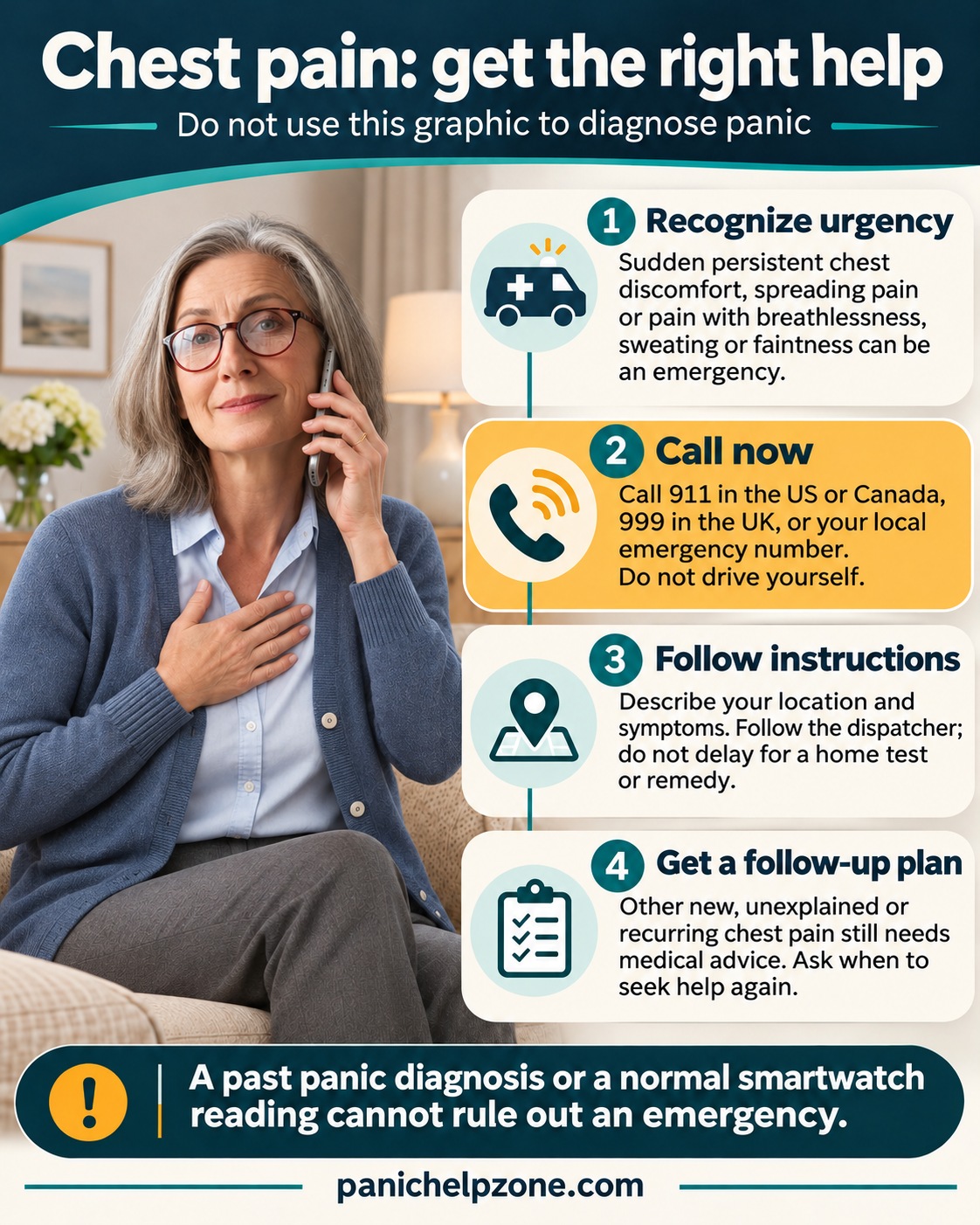
Read the visual guide as text
- Recognize urgency. Sudden persistent chest discomfort, spreading pain or pain with breathlessness, sweating or faintness can be an emergency.
- Call now. Call 911 in the US or Canada, 999 in the UK, or your local emergency number. Do not drive yourself.
- Follow instructions. Describe your location and symptoms. Follow the dispatcher; do not delay for a home test or remedy.
- Get a follow-up plan. Other new, unexplained or recurring chest pain still needs medical advice. Ask when to seek help again.
A past panic diagnosis or a normal smartwatch reading cannot rule out an emergency.
While waiting for emergency help
- Follow the dispatcher’s instructions and describe your location clearly.
- Stop exertion and rest in a position that is comfortable and safe.
- Tell someone nearby what is happening if possible.
- Do not delay help to collect documents, try a breathing exercise or search for a remedy.
- Follow specific medication instructions from emergency services or your established medical plan; do not improvise treatment from this article.
If someone is unresponsive and not breathing normally, tell the call handler immediately and follow their CPR and automated external defibrillator instructions. If you are helping, do not leave an unsafe situation or move the person unnecessarily.
Describe symptoms before offering your own explanation
Useful information includes when symptoms began, where the discomfort is, whether it spreads, accompanying symptoms and what is new or different. Mention relevant conditions, medicines and recent changes if known.
You can say: “I have had panic attacks before, but this pain is different,” or “I am not sure what is causing this.” You do not need to present a diagnosis to justify asking for help.
Ask for language, hearing, communication or accessibility support if you need it. A person helping you can share relevant information with your permission where possible, without delaying urgent care.
Leave an assessment with a clear plan
Assessment may include an examination, an ECG, blood tests or other investigations chosen for the situation. A result should be interpreted by the treating team in context. A past normal test or a consumer device reading is not a guarantee about future symptoms.
Before leaving, ask:
- What did the assessment show, and what remains uncertain?
- What should I do if the pain returns or changes?
- Which symptoms mean I should call emergency services?
- What follow-up or treatment is needed, and when?
If panic or anxiety is part of the picture, ask about appropriate care after urgent physical concerns have been addressed. Spiritual comfort can accompany care, but it should not determine whether you seek it. Keep the next action clear enough that you know what to do if symptoms happen again.